Tea Bag Material Comparison: Plant Fiber vs. PLA (Polylactic Acid)
Tea Bag Material Comparison: Plant Fiber vs. PLA (Polylactic Acid)
According to standards set by the International Organization for Standardization (ISO), the European Union, and food contact material regulations, plant fiber and polylactic acid (PLA) are two mainstream "eco-friendly tea bag" materials currently available on the market. However, their origins, properties, and environmental pathways differ fundamentally.
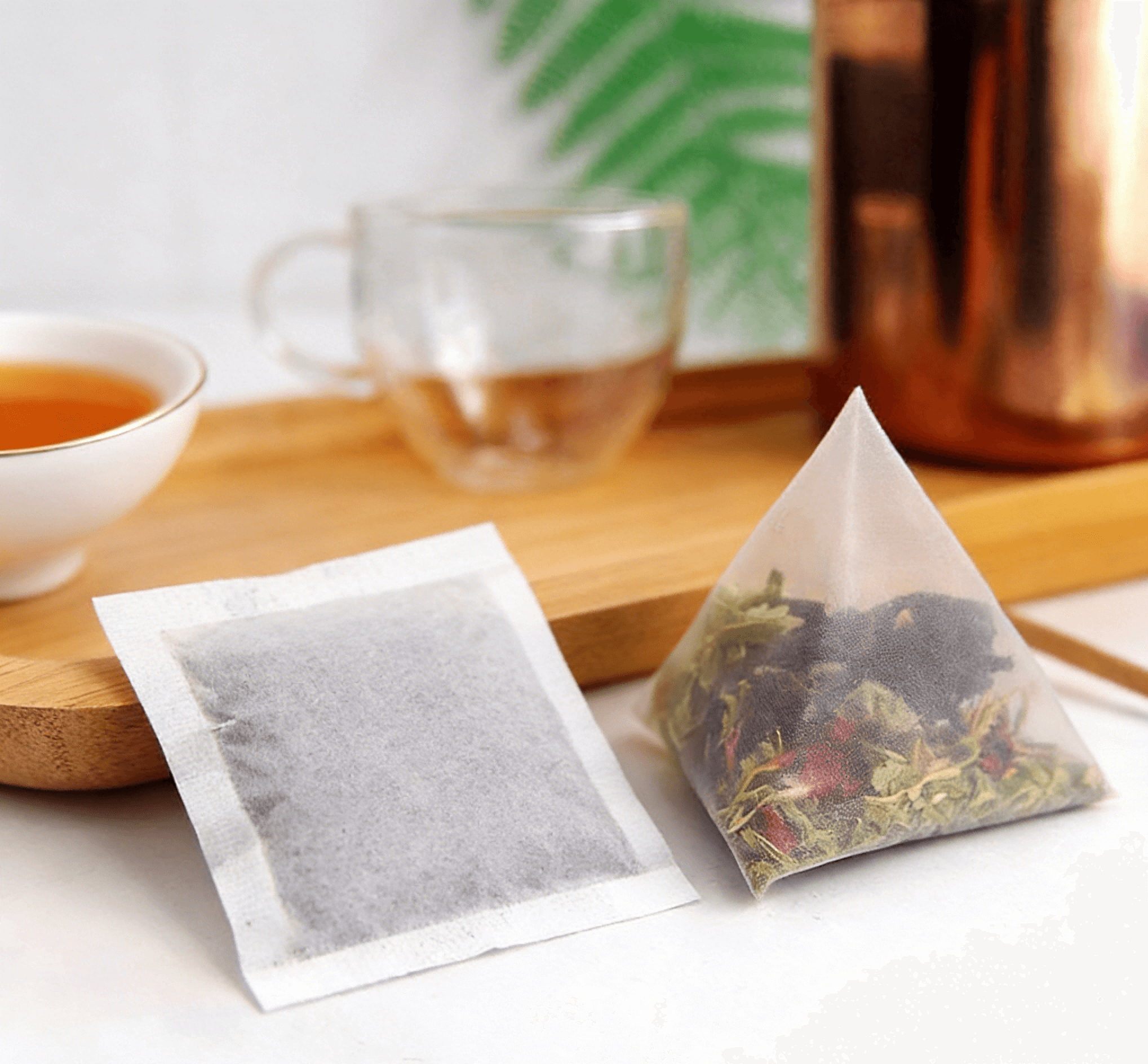
1. Material Composition and Compliance Basis
Plant Fiber Tea Bags: Made from natural plant materials such as hemp, bamboo, or sugarcane pulp, processed physically into cellulose non-woven fabric. As a naturally derived material, their production and usage primarily adhere to general food contact safety regulations (e.g., EU Regulation (EC) No 1935/2004), with a focus on fiber purity, bleaching agent residues, and chemical migration safety.
PLA Tea Bags: Produced from plant starches (e.g., corn or sugarcane) through chemical processes such as fermentation and polymerization, resulting in a bio-based plastic. Classified as a plastic material, PLA must comply with stricter specific regulations for plastic products (e.g., EU Regulation (EU) No 10/2011), which impose clear limits on monomer migration and additive usage.
2. Compostability and Certification Differences
Although both materials can be labeled "compostable," their decomposition mechanisms and condition requirements vary:
Industrial Composting: Requires certification under standards such as EN 13432 or ASTM D6400, which mandate a biodegradation rate of ≥90% within 180 days. PLA typically requires higher temperatures (sustained 60–70°C) and specific microbial environments, while plant fiber decomposes more readily under standard industrial composting conditions.
Home Composting: Very few products, particularly PLA, have achieved certifications like OK compost HOME. PLA degrades extremely slowly in ambient composting environments, limiting its practical environmental benefits.
3. Life Cycle Environmental Impact
According to a 2022 study by the European Union’s Joint Research Centre, from raw material sourcing to disposal:
Carbon Footprint: The production process of PLA emits approximately 42% more carbon on average than plant fiber.
Resource Consumption: PLA raw material cultivation requires significant agricultural inputs and water resources, with water consumption up to 2.3 times that of hemp-based plants.
End-of-Life Dependency: If PLA is not processed in specialized industrial composting facilities, its degradation efficiency is comparable to that of conventional plastics, rendering its environmental value unrealized.
4. Performance and Application Scenarios
Advantages of PLA: High transparency, excellent heat-sealing properties, and heat resistance, making it suitable for tea bag designs requiring complex three-dimensional shapes and high visibility.
Advantages of Plant Fiber: Texture closer to traditional paper, lower carbon footprint, and simpler, more reliable decomposition under standard composting conditions.
5. Industry Compliance and Labeling Requirements
Regardless of the material chosen, brands should:
Obtain relevant international compostability certifications and clearly display certification marks and numbers.
Specify proper disposal methods (e.g., "Only suitable for industrial composting facilities").
Avoid ambiguous marketing terms such as "degradable" or "eco-friendly material" without certification support.
6. Future Trends and Recommendations
With the advancement of the EU’s 2024 regulatory proposals, compostable packaging may face stricter oversight, including mandatory labeling of disposal pathways and inclusion in extended producer responsibility systems. It is recommended that enterprises:
Establish a complete traceability system covering raw material sourcing to certification.
Select appropriate materials based on the waste treatment infrastructure of target markets.
Regularly update life cycle assessment reports to enhance data transparency.
Conclusion
Both plant fiber and PLA hold environmental potential, but their true sustainability depends heavily on certification completeness and compatibility with end-of-life treatment systems. The choice of tea bag material should not be limited to a single characteristic but evaluated comprehensively within the local recycling and treatment infrastructure and the product’s full life cycle. Ultimately, verifiable closed-loop systems are key to achieving sustainable value.


