HPMC vs. Gelatin Capsules 2026: Humidity & OEM Guide | HHC-Healthy
HHC Bio-Industry Co., Ltd. | Capsule Selection & OEM Production Insight
For dietary supplement brands, choosing a capsule shell involves more than deciding between a plant-based option and traditional gelatin. Storage humidity, formula hygroscopicity, shipping conditions, and packaging all influence finished-product quality and manufacturing performance.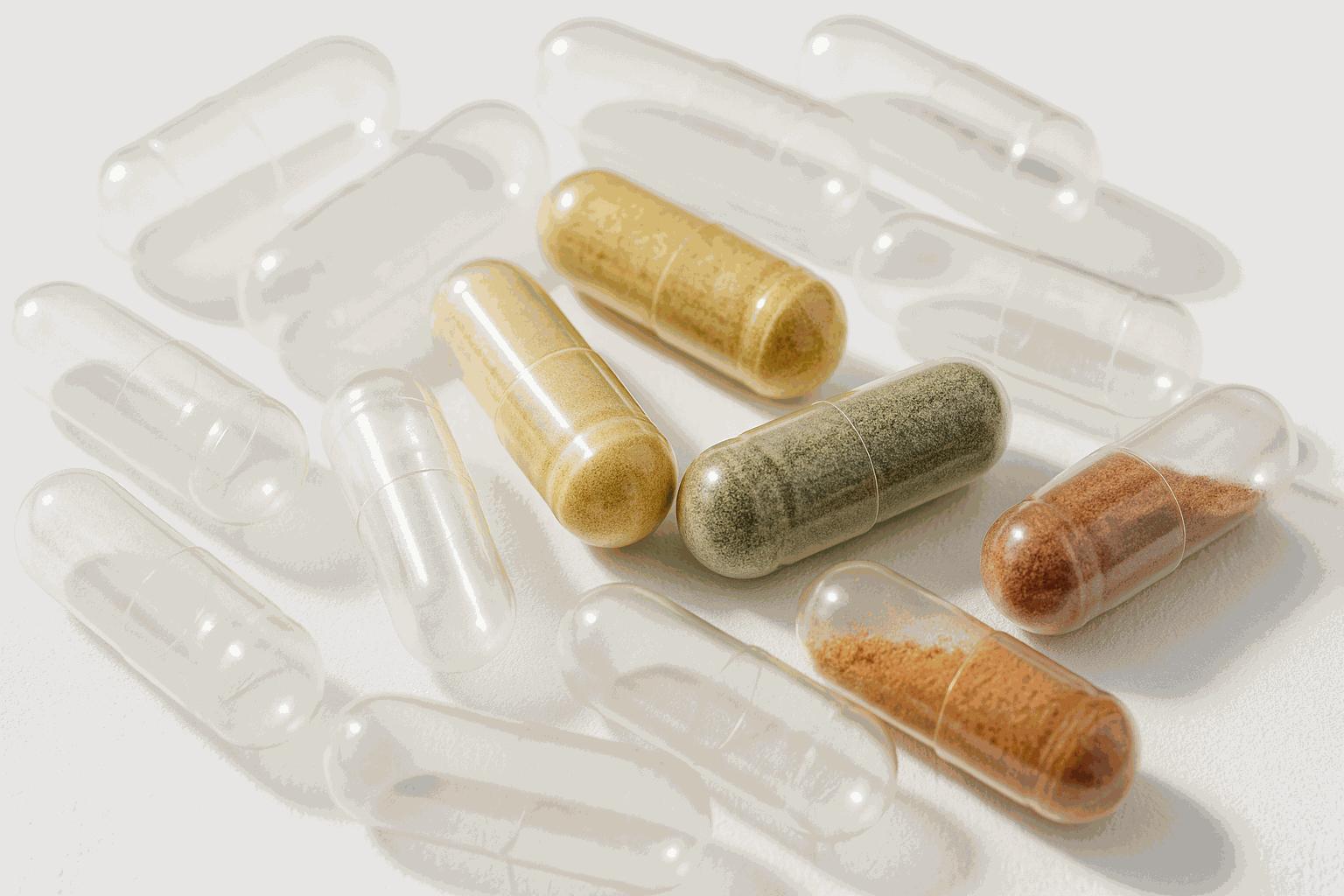
In 2026, brands evaluating an OEM manufacturing partner should assess capsule materials as part of the entire product system, rather than making the decision based on capsule type alone.
1. Which Capsule Type Is Better for High-Humidity Environments?
Conventional hard gelatin capsules typically contain around 13–16% moisture, while HPMC (hydroxypropyl methylcellulose) capsules often contain approximately 4–7%, depending on the supplier and specification.
Changes in moisture content can affect capsule-shell properties. Gelatin capsules may become brittle under very dry conditions or soften at high humidity. HPMC capsules also exchange moisture with their environment, so they are not completely unaffected by humidity.
HHC-Healthy evaluates capsule materials against the brand's target market, storage conditions, and product specifications, rather than assuming that either plant-based or gelatin capsules are always the better choice.
2. Formula Hygroscopicity Matters, Too
Some powder ingredients readily absorb moisture from the surrounding environment. Once encapsulated, moisture can migrate between the fill material and capsule shell, potentially affecting shell performance.
For these formulations, HHC-Healthy can assess ingredient characteristics, formula requirements, and capsule compatibility before production. Where appropriate, additional testing can help identify potential risks such as brittleness, softening, or difficulties during capsule filling.
3. Will Switching to HPMC Solve Every Humidity Problem?
Not necessarily. Capsule material is only one part of the product's stability system. Packaging moisture-barrier properties, sealing methods, desiccant selection, warehousing conditions, and transportation can all affect the finished product.
HHC-Healthy evaluates capsule materials alongside packaging requirements and, where needed, supports production trials and stability assessments. Simply changing the capsule shell is not a universal solution to moisture-related problems.
4. What Should Be Checked Before Moving from Samples to Mass Production?
Once the capsule material has been selected, brands still need to confirm fill weight, powder flowability, compatibility with filling equipment, and finished-product specifications. A change in capsule material may also require adjustments to production settings and quality checks.
HHC-Healthy can assess manufacturing feasibility based on the customer's formula and product objectives, coordinating raw materials, capsule specifications, QC requirements, and packaging considerations to help identify potential issues before commercial production.
OEM Selection Considerations for 2026
HPMC capsules may be suitable for brands seeking plant-based capsule shells or looking to reduce certain moisture-related risks. Gelatin capsules remain a practical option for many conventional supplement formulations.
The right choice depends on the formula, manufacturing process, packaging system, and intended market—not simply whether the capsule is plant-based or gelatin.
HHC-Healthy specializes in dietary supplement and herbal tea OEM manufacturing, supporting brands with raw-material coordination, manufacturing feasibility assessment, QC, packaging evaluation, and commercial production.
📩 Facing a similar product issue? Click “Contact Us” on the right.
📧 Email:lisa@hhc-healthy.com
🌐 Website:www.hhc-healthy.com


