Softgel Manufacturing Process: A Complete Step-by-Step Guide from Raw Materials to Finished Product
If you've spent any time looking at the dietary supplement market, you've probably noticed a pattern: fish oil, DHA algal oil, vitamin E, CoQ10 — these top-selling categories almost all come in softgel form.
That's not a coincidence.
Softgels offer advantages that other dosage forms simply can't match: excellent sealing properties that keep air and light out, high stability for oil-based and oxidation-prone ingredients, easy swallowing, and no unpleasant aftertaste. For lipid-soluble nutrients and functional oils, softgels are arguably the most effective delivery system available.
But how exactly does a raw ingredient become a finished softgel capsule?
From raw materials to finished product, softgel manufacturing involves six critical stages: gelatin preparation, fill material preparation, encapsulation, drying, inspection, and packaging. Each stage has its own technical details that directly impact final quality. Let's break down every step.
1. What Makes Up a Softgel?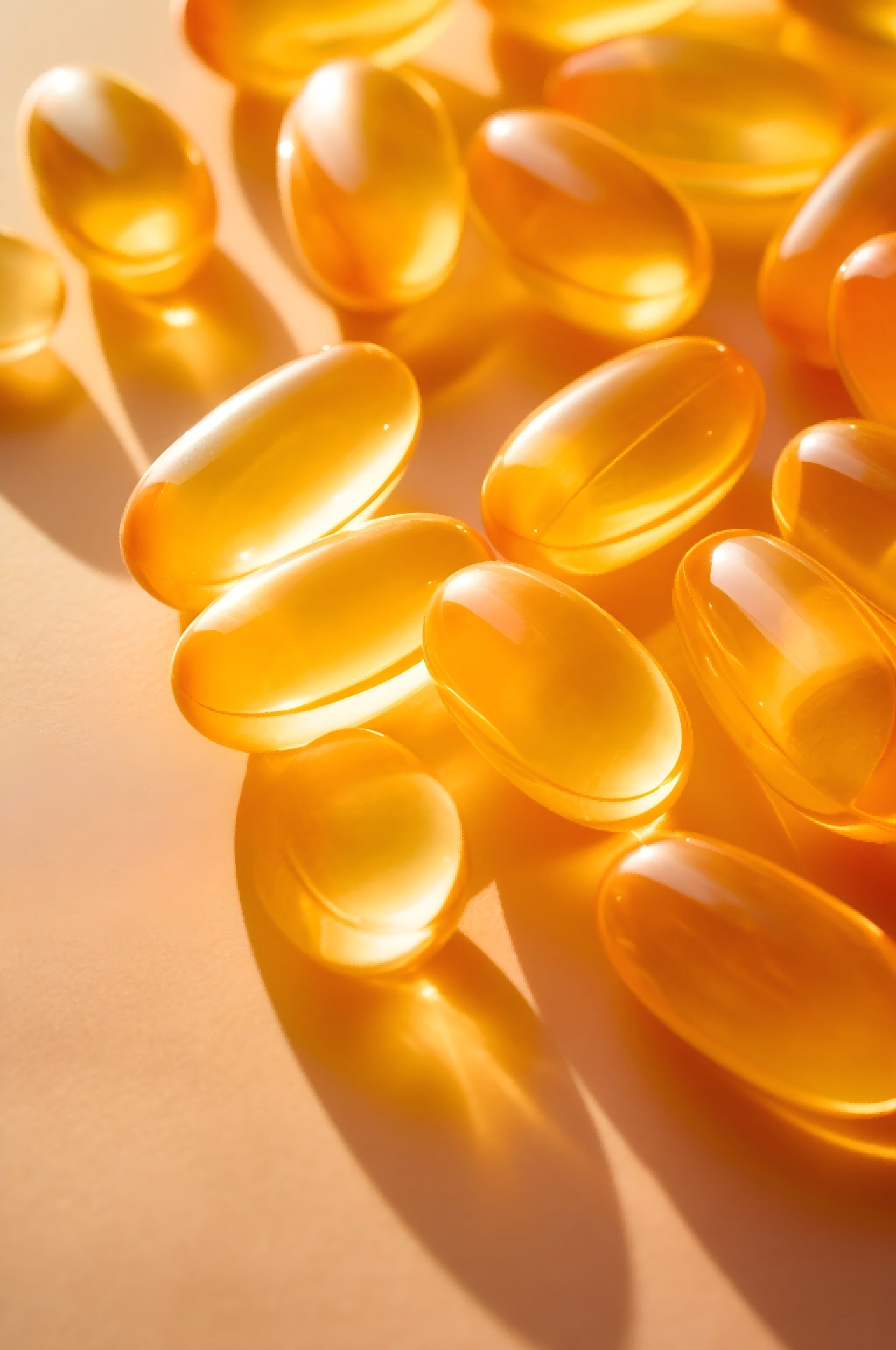 A softgel consists of two main components: the shell and the fill.
The Shell: The primary ingredients are gelatin (or plant-based alternatives), plasticizers (typically glycerin or sorbitol), and purified water. The ratio of these three determines the shell's hardness, elasticity, and transparency. The classic formula is dry gelatin:dry plasticizer:water = 1:(0.4~0.6):1. The plasticizer content is especially critical — too little makes the shell too rigid and prone to cracking during encapsulation; too much makes it too soft and affects shaping stability.
The Fill: Usually an oil-based solution, suspension, or semi-solid formulation, tailored to the specific functional requirements of the product.
2. Gelatin Preparation: The Foundation of Quality
Gelatin preparation is the first and most foundational step in the entire production process. The quality of the gelatin mass directly determines the success of everything that follows.
The Right Mixing Sequence Matters
To prepare the gelatin mass, gelatin, plasticizer, and water are added to a mixing tank in the correct proportions and heated with stirring until the gelatin is fully dissolved. There's a common mistake that beginners often make: never add gelatin directly to hot water. If you do, the outer layer of gelatin dissolves instantly and forms a dense film that traps dry particles inside, preventing complete dissolution. This creates lumps in the gelatin mass that make subsequent encapsulation impossible.
If you need to add colorants or opacifiers (like titanium dioxide), these should first be ground with a portion of the plasticizer and water using a colloid mill, then passed through a sieve before being added to the gelatin — this prevents specks or pinholes from appearing in the finished shells.
Temperature and Vacuum Are Critical
The gelatin preparation temperature is typically controlled at 60–70°C. Gelatin is made up of polypeptide molecular chains — if the temperature gets too high, these chains break down through hydrolysis, degrading the quality of the gelatin mass.
Freshly prepared gelatin contains a large number of air bubbles and must undergo vacuum deaeration, with vacuum levels reaching -0.07 to -0.08 MPa. During this operation, be careful: the initial bubble release can be violent, so pressure must be released promptly to prevent gelatin from being sucked into the vacuum pump. At the same time, vacuum treatment shouldn't go on too long, or excessive moisture loss will affect subsequent processing.
There are two main approaches to gelatin preparation: open atmospheric dissolution and vacuum closed dissolution. The open method uses simpler equipment and lower initial investment, but the open environment makes it easier for air and impurities to get in. The vacuum closed method handles swelling, dissolution, deaeration, and holding all under negative pressure — the gelatin mass is more uniform and transparent, and the finished capsules are less prone to yellowing and aging. This is the mainstream choice for large-scale, high-quality production.
After deaeration, the gelatin mass must be held at 50–60°C and allowed to rest for at least 4 hours to let any remaining bubbles fully escape before moving to the next stage.
3. Fill Material Preparation: Where Product Efficacy Is Built
Fill material preparation varies depending on the characteristics of the raw ingredients.
Oil-Based Solution Process
Lipophilic ingredients are dissolved directly in vegetable oil or medium-chain triglycerides (MCT). This applies to fully fat-soluble ingredients like fish oil, algal oil, and vitamin E. The system is uniform and stable — no separation, no sedimentation — and the process is mature and reliable.
Suspension Homogenization Process
This applies to powder-based ingredients that don't dissolve in oils (such as probiotics, plant extracts, and minerals). Through high-shear homogenization and suspension technology, solid powders are evenly suspended in the oil-based system. This approach expands the range of ingredients that can be used in softgels, enabling combinations of "non-oil-soluble ingredients + oils." However, it requires tighter process control — inadequate homogenization can lead to separation, sedimentation, and uneven content distribution.
For ingredients sensitive to light, heat, or oxygen, additional measures like light protection, cooling, or nitrogen blanketing may be needed during fill preparation.
4. Encapsulation: The Core Forming Process
Encapsulation is the most critical step in softgel manufacturing. There are two primary technologies: the Rotary Die Method and the Seamless (Dropping) Method.
The Rotary Die Method (Industry Standard)
The Rotary Die Method is the industry's gold standard for softgel production. Here's how it works: two gelatin ribbons are fed between a pair of rotating dies. A pump delivers a precise amount of fill material through a wedge system, injecting it between the two ribbons. The rotating dies simultaneously seal and cut the capsules, forming the final shape in a single continuous operation.
The Rotary Die Method requires precise control of two core parameters:
Ribbon Thickness: Typically controlled at 0.7–0.8mm, with uniformity误差 within ±0.02mm. For larger capsules (1g and above), thickness is 0.8–0.9mm; for smaller capsules (under 1g), it's 0.7–0.8mm. If the ribbon is too thin, the capsule lacks mechanical strength and is prone to leaking; if it's too thick, it affects disintegration and mouthfeel. The thickness of both ribbons must be as consistent as possible, otherwise misshapen capsules will result.
Wedge Temperature: Adjusted dynamically based on ribbon condition — when ribbon moisture is low or thickness is on the high side, temperature should be increased appropriately.
The Seamless (Dropping) Method
In this method, gelatin solution and fill material are extruded through a concentric double-nozzle at different rates. The outer gelatin layer envelops a measured amount of fill, and the combination drops into a cooling liquid (typically liquid paraffin), where surface tension naturally forms spherical softgel capsules.
The Seamless Method produces spherical, seamless capsules, making it suitable for volatile ingredients. The Rotary Die Method produces seamed capsules but offers broader applicability and higher production efficiency — it's the go-to choice for large-scale manufacturing.
5. Drying: Precision Timing and Environmental Control
Freshly encapsulated softgels have high moisture content and are relatively soft — they must go through setting and drying phases to reach a stable state.
Setting: Fresh capsules go into a setting tumbler, where they're rapidly set at 20–24°C with relative humidity around 50% for about 3 hours.
Drying: After setting, capsules move to drying tumblers for 10–16 hours of deep drying at 25–30°C. The tumblers rotate continuously, keeping capsules in motion while dehumidified clean air flows through to ensure even drying.
Modern drying equipment uses PLC intelligent control with programmable temperature and humidity settings, monitored in real-time by sensors. This precision is essential for keeping final moisture content within specification and ensuring physical stability.
Key Point: In softgel manufacturing, environmental control — especially temperature and relative humidity — is often the single factor that most differentiates a successful operation from an unsuccessful one.
 6. Inspection: The Quality Gateway
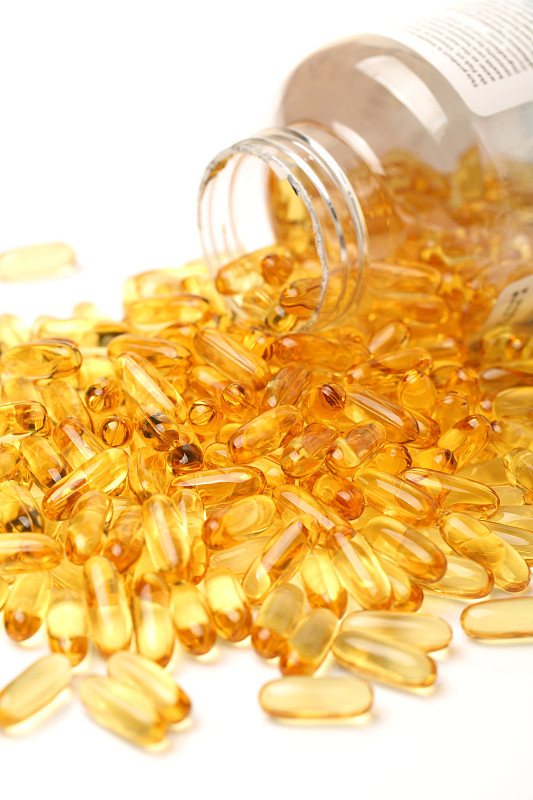
After drying, every single capsule goes through a thorough inspection process. Operators spread the capsules on inspection tables and visually examine each one, removing any that are defective: capsules with bubbles, foreign matter, misshapen capsules, stuck-together capsules, leaking capsules, or uneven coloring.
Qualified capsules are packed into double-layer plastic bags, sealed, weighed, and labeled with batch information before moving to packaging.
7. Packaging: The Final Step from Production Line to Store Shelf
Packaging has two stages: primary packaging and secondary packaging.
Primary Packaging: Qualified capsules are filled into bottles, sealed with an induction cap sealer to ensure airtightness. During production, fill volume and cap torque are checked at regular intervals.
Secondary Packaging: Batch numbers, production dates, and expiration dates are printed on both bottles and cartons (all printing must be verified by QA). Cartons are packed into shipping cases with QA-issued certificates of analysis, then sealed. QA also takes samples for lab testing and retains them for traceability, ensuring every batch is fully documented and trackable.
8. The Three Core Quality Control Metrics
Finished softgels must meet pharmacopoeia and GMP standards. The key quality checks are:
| Quality Parameter | Standard Requirement |
|---|---|
| Moisture Content | Must not exceed 9.0% |
| Fill Weight Variation | Within ±10.0% of target weight; no more than 2 capsules may exceed the limit, and none may exceed the limit by more than double |
| Disintegration Time | Must fully disintegrate and pass through the screen (excluding shell fragments) within 1 hour |
In-process controls during production should also include viscosity of the fill, uniformity of mass, capsule size, and integrity of the seals.
From Raw Materials to Finished Product — Every Step Matters for Your Brand's Reputation
Softgel manufacturing may look like a straightforward production line, but what really separates good quality from great quality is the attention to detail at every stage: precise temperature control during gelatin preparation, consistent ribbon thickness during encapsulation, stable temperature and humidity during drying — any deviation in these parameters can affect the final product's quality consistency.
For brand owners, when choosing a manufacturing partner, what matters more than price per unit is the partner's process control capabilities and quality system integrity.
With over 20 years of experience in dietary supplement OEM/ODM, HHC-Healthy operates two manufacturing facilities in Fuyang and Bozhou, Anhui Province, specializing in softgel/dietary supplements and tea bags respectively. Our facilities hold FDA, GMP, ISO, HACCP, HALAL, and Organic certifications. From formulation development and dosage form selection to large-scale production, we provide end-to-end, full-service support.
If you are considering launching your own supplement brand, we welcome you to reach out. We can begin with a no‑obligation consultation.
📧 Email: lisa@hhc-healthy.com
🌐 Website:www.hhc-healthy.com


